How Cosplay Becomes a Tool for Identity in Places With Limited Resources
In Nairobi, Kolkata, and Seattle, cosplayers without access to imported materials or mainstream visibility are turning cardboard, PVC pipe, and long qualifying rounds into a working infrastructure for belonging.
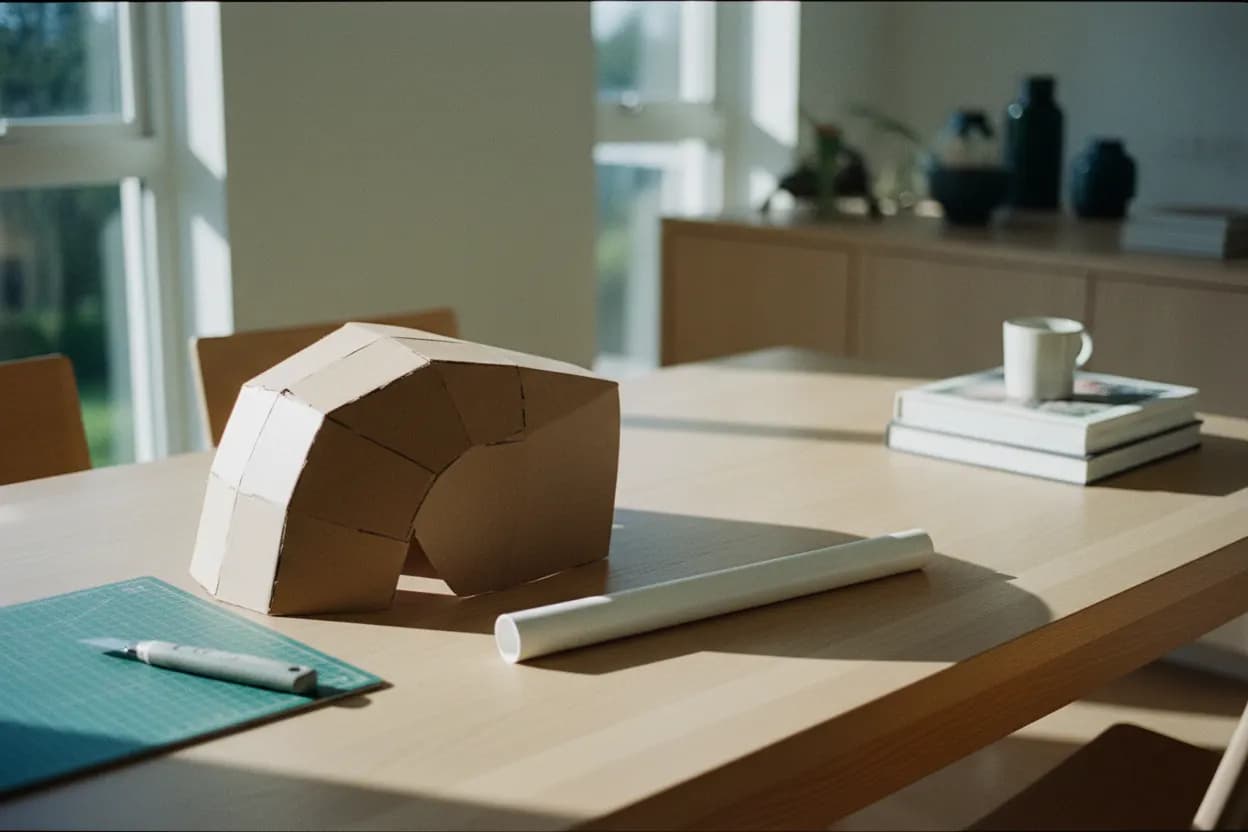
Cosplay, as it is usually photographed, runs on imported wigs, resin armor, and a credit card. That version of the hobby assumes access: to fabric stores that stock the right synthetic leather, to 3D printers, to a convention circuit priced in dollars or yen. Outside that assumption, cosplay still exists, but it runs on a different set of tools — cardboard, PVC pipe, a qualifying round at a regional comic con — and it does a different kind of work for the people who practice it.
Cardboard, PVC, and a Convention in Nairobi
Otamatsuri, Kenya's annual anime and manga convention, has become one of the largest gatherings of its kind on the continent. Its most recent edition, held in Nairobi in August 2026, pulled in more than 4,000 attendees dressed as characters from franchises like One Piece and Naruto.
Getting into costume is not simple there. Julius Mokaya, a 34-year-old building caretaker, has twice won the convention's costume competition without ever importing a piece of his gear. He cannot afford to, so his apartment is stocked with weapons, masks, and armor built from cardboard and other material he pulls out of recycling bins.
His 2026 entry was Enjin, a character from the manga Gachiakuta, whose plot follows an exile who lives among discarded objects. The parallel was not lost on Mokaya: the material he could not afford to replace became the same material the story insisted was not worthless.
I'm broke half the time, but... I love the creative aspect, the deep dive into research and understanding the character.
Other cosplayers at Otamatsuri solve the materials problem with equally improvised methods. Yvonne Chockey, who won this year's competition dressed as the Digimon character Angewomon, heated sand to bend PVC pipe into the frame for eight wings, then cut and attached each feather individually.
None of this is new to the scene. Otamatsuri has run every year since 2019, meaning the improvisation on display in 2026 reflects an established practice rather than a one-off workaround. The convention has had time to become a fixture, and the resourcefulness that defines it has had time to become a skill set, passed between cosplayers rather than reinvented each season.
A Different Kind of Scarcity in Seattle
Not every resource gap is about fabric or shipping costs. In Seattle, the constraint the Black Nerd Festival addresses is representational: a fan culture that has historically treated Blackness and nerdery as separate categories, forcing people to choose between them or code-switch inside a single identity. The festival, presented by the nonprofit Langston, ran its second annual edition over three days in August 2026, drawing an expected 2,000 attendees, up sharply from roughly 500 the year before.
Cosplay sits inside that festival alongside gaming panels, live music, and burlesque, not as the headline but as one of several tools for the same goal: making a claim on genres and spaces that fans often had to enjoy alone, or quietly. The costume, in that context, is less about scarcity of materials and more about scarcity of rooms where a particular identity and a particular fandom are allowed to occupy the same body without explanation.
Fabric Markets and Qualifiers in India
India's cosplay scene runs into a third kind of limit: distance. Karan Desai and Karan Prakash won the ZIPAIR Next Journey Award at the World Cosplay Summit 2026 in Nagoya, representing India as Yoshimitsu and Devil Jin from the Tekken franchise.
The summit itself is not a small stage. The 2026 edition ran from July 31 to August 2 at Oasis 21 in Nagoya, with two-person teams representing 41 countries and regions, each having already won a national qualifying round back home.
For Desai and Prakash, that qualifying round happened months earlier, at Kolkata Comic Con in April, where they competed as Chaos Crusaders and beat out other national contenders for the trip to Japan.
Getting from that qualifier to a finished costume meant solving a supply problem of its own. Prakash's Devil Jin build alone required more than 15 different fabrics, plus embroidery, embossing, and other fabrication techniques, and the pair traveled between cities to track down the specific materials the design called for — a search that, in a market without a dedicated cosplay supply chain, is its own form of craftsmanship.
India's cosplay scene has been building toward this kind of result for a decade, having previously taken the summit's Best Armour category twice without yet winning the top Grand Championship prize.
Comic Con India's Indian Championship of Cosplay functions as the connective tissue behind that progress, giving cosplayers a structured path from city-level competitions to the international qualifier, according to the organization.
What links Nairobi, Seattle, and Kolkata is not a shared shortage but a shared response to whatever shortage each scene actually faces. In Kenya, that means building armor out of what would otherwise be thrown away. In Seattle, it means building a stage where a particular identity does not have to be explained before it can be celebrated. In India, it means building a qualifying pipeline sturdy enough to send a costume across fabric markets in three cities and then across an ocean. In each case, the costume is the visible part. The infrastructure underneath it — the recycling bin, the nonprofit, the qualifier system — is where the actual work of turning a hobby into an identity happens.