Why Does Every Girl on My Feed Have a Tiny Mic
A December neuroscience clip was treated as the start of an epidemic; the same essay quotes a creator inside it saying you cannot be thoughtful quickly.
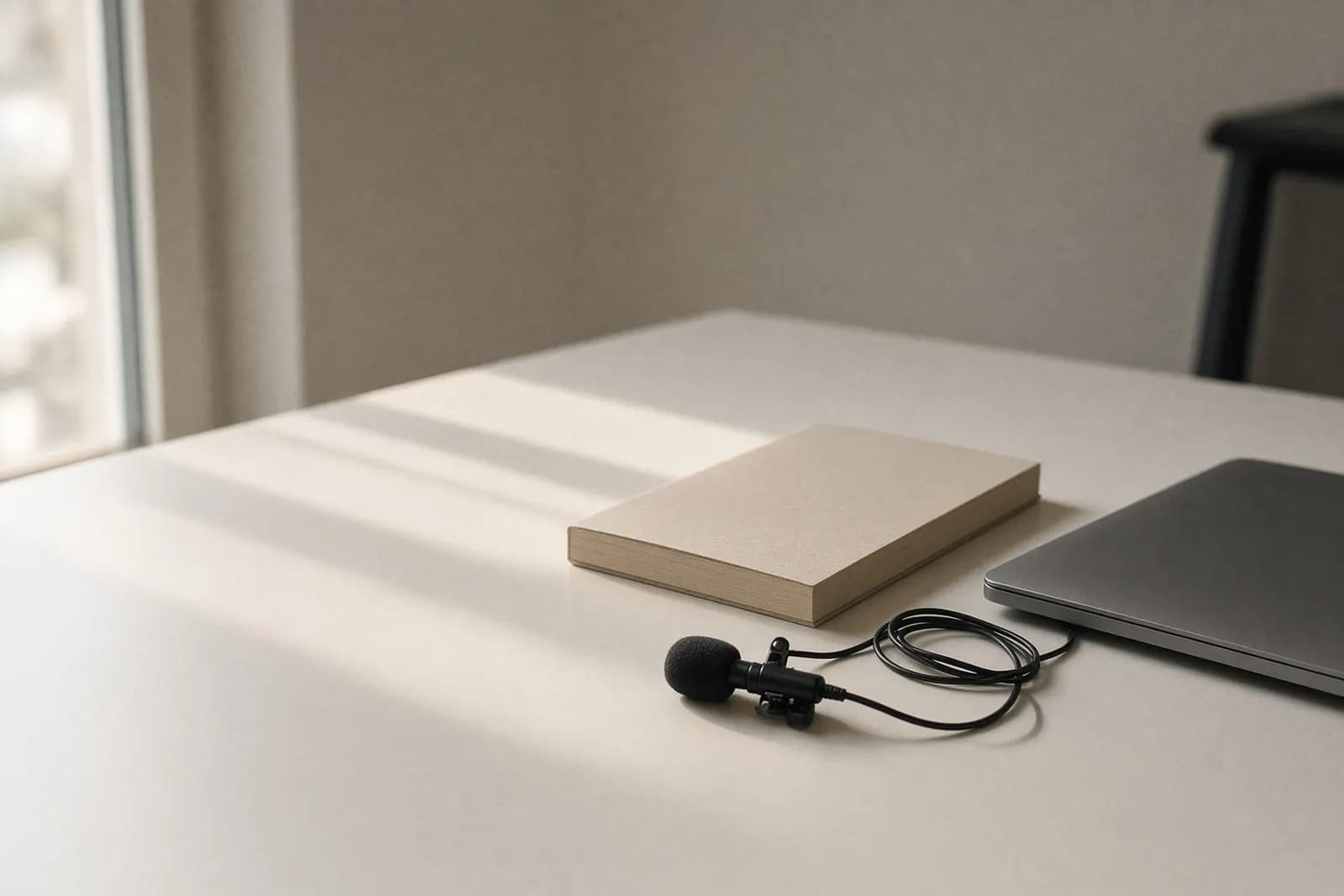
On 10 September 2026 Dazed treated a swarm of short explainer videos as an epidemic. It named a tiny mic as the look of that swarm. The question people keep asking is why that object is in every other clip. What the pages still do is cut the thought at a minute and sell the rest as a class. That sequence turns out to govern far more than the two accounts a magazine spent the most time on.
Nine days later a French radio recap described the same swarm walking through psychology, politics, history, maths and literature in a few seconds. That is already a list of subjects, not a niche of neuroscience clips. Dazed's dek used one word for the person in the clip. The recap used another. Neither label is what the format does next.
What the minute is for
Dazed's opening case is a video from December 2025. Kaitlyn Gilbride posted on the neuroscience of admiration, and the magazine said it was the first time she went super viral. Nine months later that minute was being asked to stand for a whole swarm. A single viral clip is a case. It is not a census. The linked clip is Dazed's. This page did not open it as a live feed.
What she told the magazine afterwards is a theory of appetite. People, in her account, are finished with a makeup video. They want a clip they can take somewhere else and use.
The slogan Dazed attaches to that appetite is a theory of the feed: education as the thing brain rot is not. That is what a minute has to be for, if the clip is going to feel like growth. It is also what a class can sell once the clip is over.
Shuang Bright, in the same essay, is not arguing about appetite. She is arguing about speed. Commentary produced on a clock, she told Dazed, cannot be thoughtful. The short videos, in her wording, are a false front of a lesson.
The reason she gives is not taste. It is a distribution limit she says she already lives under. Past a certain length, she told Dazed, Instagram stops pushing the video. The rest of the topic is what that cut removes. That is her account of the platform, not a rule verified from Instagram.
Those are not two descriptions of one minute. Gilbride is talking about what people want from a clip. Bright is talking about what a clip cannot hold. Averaging them would be a courtesy to nobody. The appetite can be real, and the cut can still be doing the work.
The appetite can go viral. The thought cannot survive the cut.
Who still publishes the format
Two people were checked from a page they published themselves. Coverage of the swarm lists names and moves on. Commentators spoke to the magazine; they are not treated here as practitioners. What follows is where the format still sits, rather than where a dek said it did.
One still sells the rest of the minute as school. The other still opens a clip as a lesson. The order is the argument: the door first, then the limit the door is answering.
Gilbride is the membership door. The hub she publishes still presents itself as a school, and still puts a paid academy first. The minute is the free sample. The rest of the thought is a class.
That door is the part a viewer cannot see from the clip. Someone who felt they learned something has already done the work the academy is there to continue. The feeling of having learned is the product. The membership is where the sentence was supposed to finish.
Bright is the format's limit, written as a caption. A Christmas Day post on her own Instagram still opens as a lesson, then names a film. That is not a comment on the swarm. It is the format, in her wording, on a day she was also talking about a movie.
An independent count in September is the figure this page uses for scale. SocialBlade printed 189,917 followers on that Instagram. The lesson caption sits on an account of that size, not on a private grid.
Gilbride's Instagram, the account Dazed said went super viral, printed 28,154. Going super viral on a minute is not the same as holding the larger room. The membership is one way of living in that gap.
Off the feed, Gilbride's own writing is about thinking time. A September Substack post draws a line between a tool that frees up hours and a model that would write the sentence. That is not a confession about explainer scripts. It is her saying who is still doing the thinking.
By the last of those pages the reader has a range: a hub that sells the rest of the minute as school, a caption that still opens as a lesson under a cut she has already named, a larger fashion-history room, a smaller neuroscience account that went viral, and a line about who is allowed to write the thought.
None of that is information the clip carries on its own. The hub, the caption, and the counts sit off the minute, which is the point. That range is what lets the next section talk about the swarm without another fact about either of them.
Why this is not only two accounts
It would be easy to file this as a magazine story about two accounts Dazed named, and stop. The useful part is the sequence. A minute with a face attached sells the feeling of having learned something. A distribution rule, as Bright describes it, cuts the sentence before the topic is finished. A hub sells the rest as a class. Anyone whose living is now that minute is inside the same arrangement, including the 60-second yoga and history examples Dazed linked and this page did not close.
Ruby Thelot, speaking to Dazed as a designer rather than as a practitioner, put the appetite on the phone rather than in a room. That is a different claim from Gilbride's, and it does not need her academy. It only needs the hours already spent looking down.
That sentence does not require a neuroscience brand or a fashion-history grid. It describes a habit the feed already has. Once the minute has a face attached, the product is not only information. It is the feeling of having learned something from a person. That is a one-sided bond with a lesson as the intimacy.
The same arrangement now sits next to a machine. Gilbride's own line, off the feed, is that she wants time to think rather than a model writing the thought. The question that raises is what a thought becomes when the other side of the phone is generated. That is not a claim about how her scripts get written. It is the next place the minute already points.
What is honestly available
This page did not open a video that showed a microphone in frame. Dazed named the mic as the look of the swarm. The French recap described a lavalier held in the hand. Gilbride's hub and Bright's caption do not print the word. The honest object is the minute, the cut, and the door.
Whether Instagram will not push a video over three minutes is Bright's claim, as Dazed quoted her. It is not a rule verified from Instagram.
Gilbride is selling application. Bright is naming a facade. They are still not talking about the same minute.
A viewer cannot audit a thought from a clip that was built to end. That is worth saying plainly rather than ending on advice about how to watch.
The minute will keep arriving. Whether a thought happened is not something the feed is built to answer.