Why Did the Costume Become a File You Download
A 31 October finish guide still opens on a box of raw printed parts, and a 26 October video still titles turning a generated image into plates.
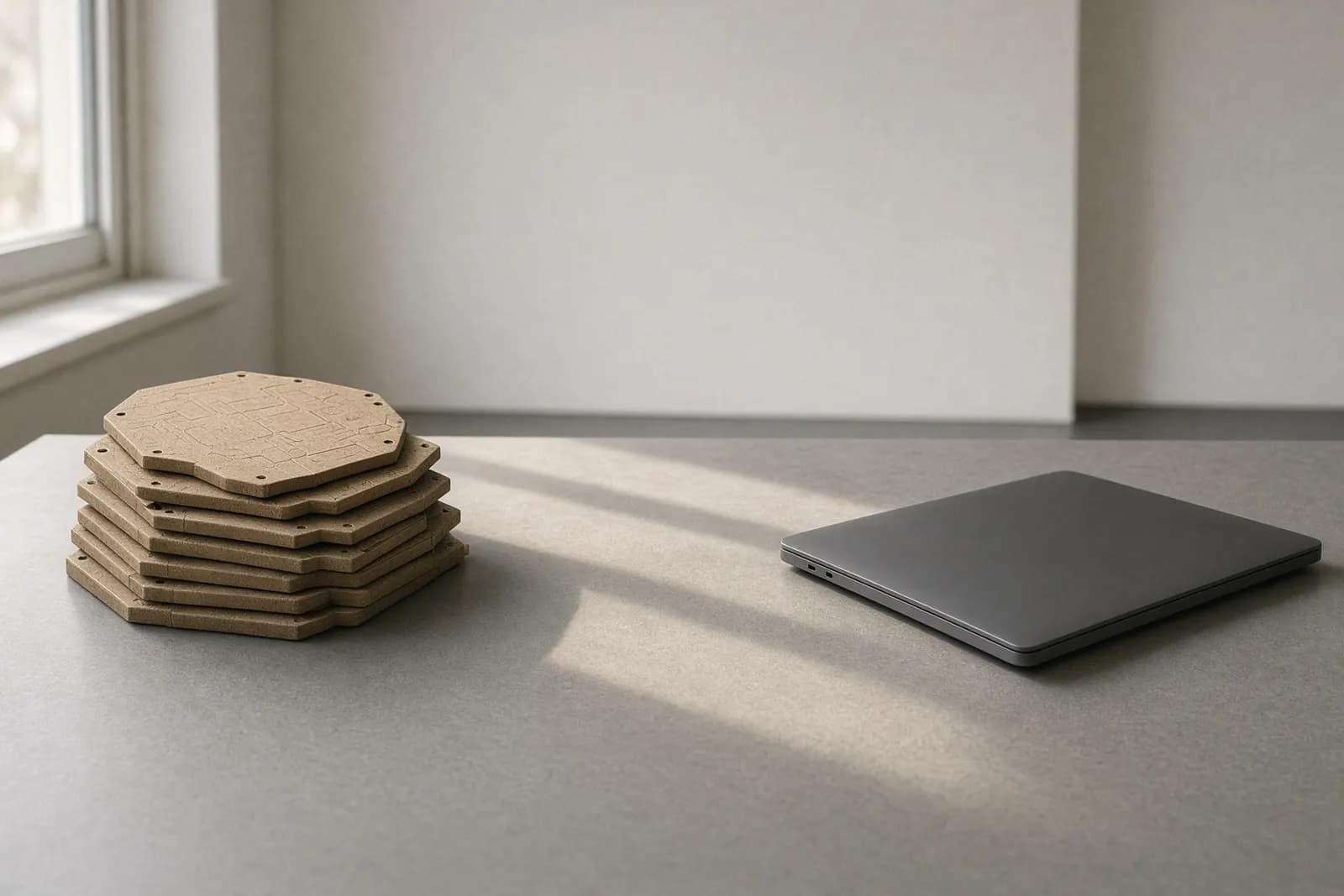
On 31 October 2026 a shop still had to publish a guide for the day the post landed. What it chose to say first was already a verdict about the contents.
The search still wants a method for finishing what arrived, or a ruling on whether a printer counts. Almost none of that leftover is specific to one shop. It is what a costume is when the remaining public object is a file somebody else still has to finish.
What was said first
The dated first object is a shop homepage that still sells the costume as a download, and still posts a physical version of the same leftover.
The armor the buyer wanted is still something the shop describes twice: as a file, then as work remaining.
The same page still treats a paid month as remote access to new work. Commercial printing is licensed with that month rather than handed over as a painted suit.
The 31 October guide is the instruction that leftover requires. The FAQ still treats the kit as labour the shop will not do, and still leaves the fittings out of the box.
The homepage and the guide are one job. The remaining public object is the file, and the kit is the file made physical before anyone has finished it.
A 26 October upload is a different leftover of the same armor. The title still treats printed armor as something a workflow can finish.
The description still names the operator, and still prints the conversion as the point of the upload.
They share the leftover of the armor as a file. They do not share a job. One still has to sell the download and ship the unfinished kit. The other still has to title a workflow that starts from a generated image. The leftover is a file. The armor still has to be finished.
The leftover is a file. The armor still has to be finished.
Who still publishes the leftover as a file
Four pages carried that leftover on a surface opened for this piece. Coverage of printed armor tends to take a method and move on. What follows is where each of them actually puts the file, checked rather than assumed.
Outer Rim Armorer is the shop from the opening. A campaign story still names Bryan as the person on that shop.
The remaining job there is the file and the box at once.
Steve still publishes as 3D Jesus. The about still names him as the person behind Timberlake Creations. That is the standing identity the 26 October workflow sits under.
That leftover is a method a person can run. It never has to ship.
Galactic Armory still keeps a file collection that runs into the dozens of pages. The remaining public object at that scale is the catalog itself.
A late-September file on that channel still points a viewer at a helmet on the shop. That is how the catalog gets worn.
NMT's Workshop still has to say what the buyer is actually purchasing.
The shop's remaining public object is a piece that still needs paint. The download is the thing it will not sell. Averaging that sentence with Outer Rim into what printed cosplay is allowed to mean would miss that they are two leftovers of the same armor.
By the last of those pages the reader has a range. One leftover is a file and a box of raw parts. One leftover is a workflow that starts from a generated image. One leftover is a sixty-seven-page catalog a September file can tag. One leftover is a printed piece that will never be a file. The search collapses them because they share a printer, and the pages do not.
Why this is not only those four pages
If the remaining object is a download, the next question is the scoreboard that already bars a shop-purchased item.
That piece was a championship page that scores a handmade percentage. This one starts after it, with the object that page already refuses to score.
If the living is selling the file so somebody else can finish it, the next question is the living of putting a costume on someone you know.
That piece was a costume that leaves on another internet person. This one is a costume that leaves as a folder.
The 26 October workflow starts from a generated image. The journal already has the case where a generated costume is a video nobody in it wore.
This is the case where that leftover becomes plates. Who is allowed to publish it is a different fight from a swapped face on someone else's hours.
This is not only four shops, and it is not only armor. Anyone whose living is now a file they have to sell so somebody else can wear the character is in the same bind. So is anyone who has opened a shared folder and realised the costume still has to be finished at home.
What is honestly available
There is no 2026 earnings figure in this piece. The Kickstarter story is used here for the name on the shop.
Four pages do not add up to a map of how printed armor gets made. They add up to four different answers to what the leftover of the armor is for.
A search for how to finish the kit wants a method. What is on the pages is a costume that already left as a file. Very little of that finishing is the shop's job anymore, which is worth saying plainly rather than ending on a trick for sanding faster.