Why Did BookTok Get a Masquerade
A Leamington ticket still prints fae as the dress code, an Oxford listing still titles a midnight party, and a Spitalfields pickup still opens with pastry.
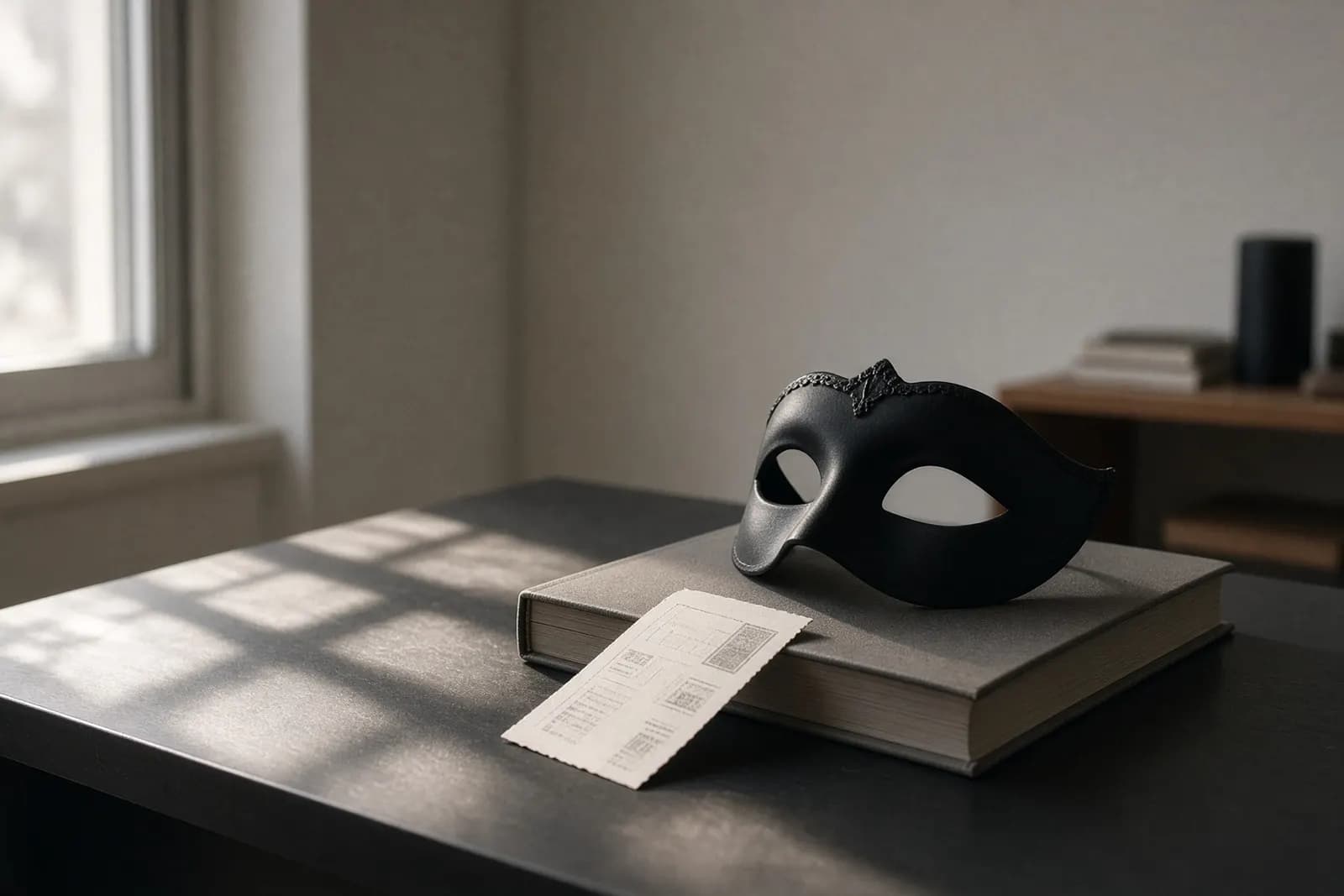
Six thousand people tried for 220 tickets to a masquerade ball for a Sarah J Maas novel. Days later the leftover public object was still that night.
That gap is the piece, and it governs far more than one hall in Warwickshire. The same release produced a midnight queue in Oxford and a pastry pickup in Spitalfields. A timestamp can put a novel on sale. The leftover public object is a night a shop still has to throw.
What the ticket still prints
The Guardian dated the mania to 28 October. Ali Maynard James, named there as co-founder of The Spicy Librarian in Leamington Spa, put a number on how fast the night disappeared.
The book those tickets were for arrived on a publisher's clock, after a gap of years. The leftover job was a room that had to look like a court.
The shop hired a Warwickshire hall and put riders on the lawn. The price the paper printed was a stately-home night, which is a different job from a shop-floor queue.
The listing that is still up does not have to settle what the genre is called. It has to tell a guest what to wear. Opened on 31 October, the dress-code question still had a three-word answer.
Those three words are the remaining public object of a novel. A reader who missed the night can still see the instruction: the book is already out, and the leftover sentence is a costume.
A review of the book would have been a different leftover. This one is an instruction. The night is over, and the sentence is still doing the work of a door.
Midnight openings are old. What this night required was a costume for a room, added to a till that stayed open late. A bookseller used to be a counter, and this one still has to tell a guest how to look like the book.
The same FAQ still has to police the clock. A goody bag cannot go out until the publisher's timestamp says so, which is why a ball in a hall is also a race.
A night that has already happened can remain the headline of a bookshop. On 31 October the Leamington homepage still had a timer at zero and a button asking for tickets.
The book went on sale at midnight. The leftover object is a dress code.
Who still has to throw the night
Coverage of a sell-out lists a cast and moves on. What follows is where three remaining pages actually are, checked from a shop, a ticket, or an Eventbrite title they still publish.
The Guardian's co-founder is Ali Maynard James. The Leamington homepage still publishes Dee as founder, and she is the person who signed the shop blog. Those are two names on two remaining objects. The leftover ticket names the shop, which is why the piece follows the page that still has to throw the night.
Dee had already put the balls on a public calendar in September. The post is signed in her own name, and the word it prints is the one the leftover ticket still carries.
A September blog can date a night. The leftover ticket is what that calendar became.
Starlin Marot is the midnight version of the same Tuesday. The leftover title is still a party in the shop, with her name as the presenter.
The plan was a short opening for a handful of people who had asked. What arrived was a door she said she had not sized for.
The paper also has the clothes people wore to wait. That is a smaller public than a hired hall, and it is the one that shows the race reaching an ordinary counter.
She has been answering a charge about these books since the summer. The July headline on her shop was already a defence of fairy smut, and Petra, first in that queue, was already being asked to answer it. Marot's own About page still publishes the dismissal as a standing fact of the genre.
The masquerade is one answer to that reduction: print the court so the night looks like the world of the book. The friend who handed her the series had found it on TikTok. The leftover object of that recommendation is a shop that still has to throw a midnight.
The people who have to answer the charge and the people who throw the night are already busy with a venue. A definition would arrive late, and at the wrong counter.
Cassie Simmons is the morning version. Spitalfields had a different job from Leamington and Oxford: keep the till on a human clock, and still look like the book had arrived.
The leftover page is still a pickup. Opened on 31 October, the morning slot still opened with pastry, and the evening ticket still had to print fae. Both listings were marked sold out. The shop that kept the doors shut at midnight still has a remaining night on the site.
By the last of those pages the reader has a range. One leftover object is a £149 dress code at a stately home. One is a midnight queue a shop had planned as half an hour. One is pastry from 8.30 and a soiree that still has to print fae. They share a release night. They do not share a job. That range is what lets the next section talk about the night without another fact about any of them.
The timestamp is the same. The living is not. A hall, a queue, and a pastry counter are three ways a shop absorbs a clock the feed already treated as an event.
A reading practice that arrived from TikTok leaves a shop as the public object. The journal has already watched a hobbies report sell a name that kitchens were already using. This is the other leftover: a book that still has to print a court.
Why this is not only three bookshops
Filing this as a story about one Maas release misses the sequence. A timestamp goes on a novel. Shops become venues. The leftover page is a dress code, a midnight title, or a morning pastry. Anyone whose living is a shop that now has to look like the feed already treated the book as a night is inside that sequence.
The leftover clothes are doing a job. At a park the remaining permission is mall clothes that will still walk in. On this ticket the remaining instruction is fae. Both leftover objects are dress codes. One venue will take the colours. This one requires the court.
A comment that wanted a definition of spice will keep arriving. The shops are already busy throwing the night.
The charge has been sitting on a shop door since July. The leftover ticket is what the shops did with it. That is why this is not only three UK counters, and not only a story about one series.
What is honestly available
What can be checked is a dated paper, a sold-out listing that still prints fae, a countdown at zero, an Eventbrite midnight title, and a Spitalfields pickup that still opens with pastry. Three people still have a remaining night on a page they publish. That is enough to say the leftover object of this book is a venue. It is not enough to say the next release will hire a hall.
There is no form that takes the dress code off a sold-out ticket. Putting the book on sale does not retire the masquerade from the homepage. Keeping the doors shut at midnight does not retire pastry from the pickup.
The embargo is a timestamp. The dress code is the remaining sentence. A reader who missed the night can still open a costume instruction for a novel that is already out.